Winter Traction Devices: When to Use Microspikes vs. Crampons
As the crisp air of autumn gives way to the biting cold of winter, many outdoor enthusiasts pack away their hiking boots, resigning themselves to a season indoors. But for the intrepid few, winter presents a new frontier of breathtaking landscapes and thrilling adventures. However, this beauty comes with a crucial caveat: the treacherous challenge of ice and compacted snow. Navigating these slippery conditions demands the right gear, and when it comes to personal traction, the debate often boils down to two essential tools: microspikes and crampons. Understanding when to use each can be the difference between a memorable winter excursion and a perilous slide.
The Crucial Role of Traction in Winter
Winter hiking and mountaineering are inherently more dangerous than their warmer-weather counterparts. Icy trails, hidden crevasses, and hard-packed snow can turn a simple walk into a high-risk endeavor. A slip can lead to serious injury, from sprains and fractures to more severe trauma, especially on steep terrain or near exposed edges. Proper traction devices don’t just make your journey safer; they conserve energy, increase confidence, and allow you to access stunning, otherwise inaccessible winter vistas. Choosing the wrong tool, or worse, no tool at all, is a gamble no one should take when venturing into the winter wilderness.
Microspikes: Your Go-To for Icy Trails
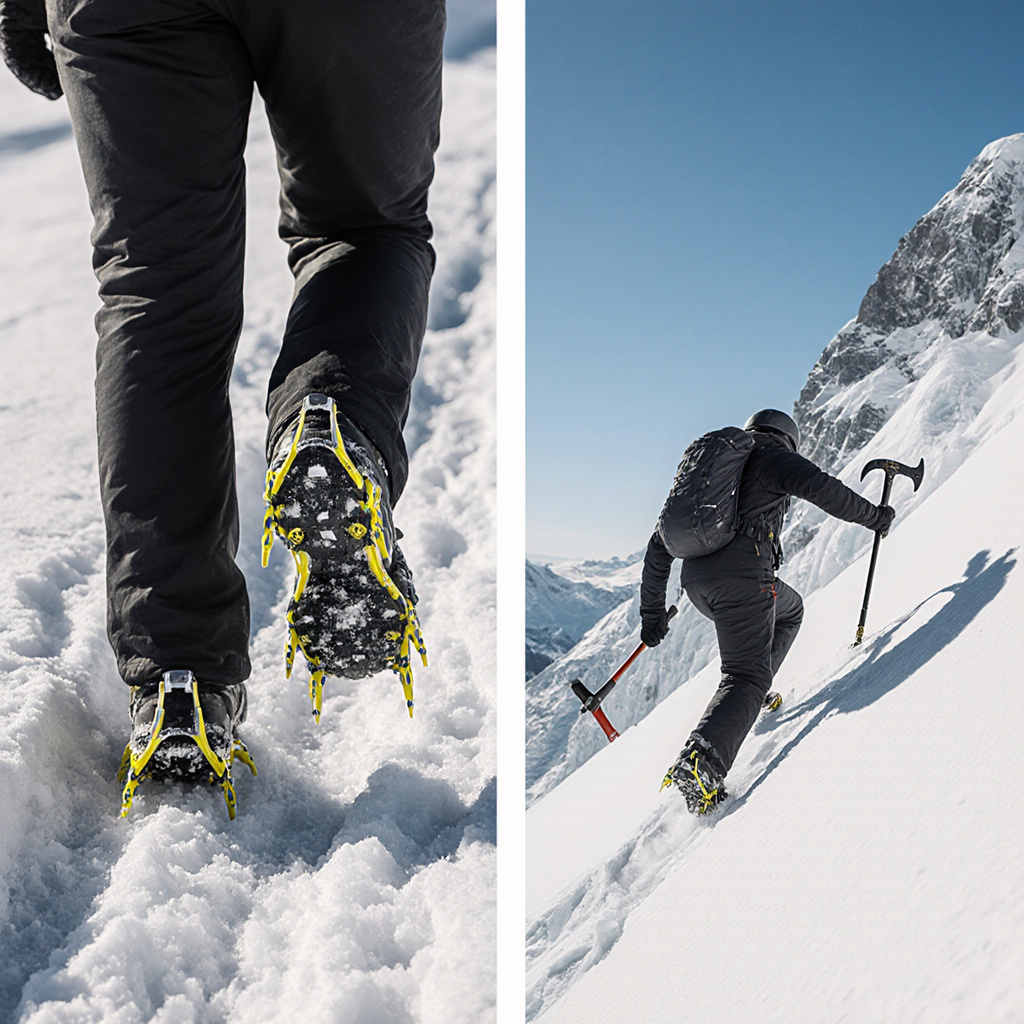
Microspikes are essentially a hybrid between traditional traction chains and miniature crampons. They typically consist of a rubber harness that stretches over your boot, fitted with a series of small, stainless steel spikes or coils on the sole. They are designed to provide enhanced grip on packed snow, icy trails, and moderate slopes where full-blown mountaineering crampons would be overkill. Think of them as snow tires for your feet – ideal for conditions where you still want to maintain a relatively natural walking gait.
When to Use Microspikes:
- Icy Hiking Trails: Perfect for day hikes on well-maintained but icy paths.
- Packed Snow: Excellent for consolidated snow where boots alone would slip.
- Rolling Terrain: Suitable for areas with gradual inclines and declines, not excessively steep.
- Winter Running: Lighter models are popular among trail runners seeking grip on icy segments.
- Approaches to Less Technical Climbs: For getting to the base of a climb over snow and ice before switching to more aggressive gear.
Pros of Microspikes:
- Lightweight and packable.
- Easy to put on and take off.
- Flexible design accommodates various boot types.
- More comfortable for walking long distances on varied terrain.
Cons of Microspikes:
- Limited effectiveness on steep, hard ice or mixed rock/ice.
- Prone to balling up with wet, sticky snow.
- Not suitable for technical mountaineering or glacier travel.
Crampons: The Edge for Technical Terrain
Crampons are significantly more aggressive than microspikes, featuring larger, sharper, and more numerous points (typically 10 to 12) designed for serious grip on steep ice, hard-packed snow, and mixed terrain. They are an indispensable tool for mountaineering, ice climbing, and glacier travel, providing the necessary bite to safely ascend and descend challenging winter environments. Crampons come in various binding styles—strap-on, hybrid (semi-automatic), and automatic (step-in)—each requiring specific boot compatibility and offering different levels of security and performance.
When to Use Crampons:
- Steep Ice and Glaciers: Essential for crossing glaciers, ascending icefalls, or navigating hard, icy slopes.
- Technical Mountaineering: Required for routes involving rock, ice, and snow where self-arrest and secure footing are paramount.
- Mixed Climbing: For terrain that alternates between ice, rock, and snow, demanding robust and adaptable traction.
- Hard Snow Conditions: When snow is so consolidated it behaves like ice, microspikes won’t provide sufficient penetration.
- Above Treeline in Alpine Environments: Where conditions can change rapidly and often involve exposed, icy pitches.
Pros of Crampons:
- Superior grip and penetration on hard ice and steep snow.
- Indispensable for technical climbing and mountaineering.
- Offer greater stability and security on challenging terrain.
- Robust construction for demanding conditions.
Cons of Crampons:
- Heavier and bulkier than microspikes.
- Require specific, rigid boots for proper fit and performance (especially hybrid and automatic types).
- Less comfortable and efficient for walking on flat or undulating terrain.
- More expensive and require specific skills (e.g., proper footwork, self-arrest training).
Making the Right Choice: Factors to Consider
The decision between microspikes and crampons hinges on several critical factors, primarily the nature of your objective and the conditions you expect to encounter. Misjudging these can lead to a miserable, or even dangerous, outing.
- Terrain: Are you walking on rolling, packed snow trails (microspikes) or ascending steep, icy couloirs and glaciers (crampons)?
- Slope Angle: Gentle slopes and flats are fine for microspikes. Once you hit steep inclines where a fall would be catastrophic, crampons become essential.
- Ice/Snow Consistency: Soft, consolidated snow with patches of ice might be okay for microspikes. Hard, boilerplate ice or neve requires the robust penetration of crampons.
- Boot Compatibility: Microspikes are versatile. Crampons, particularly hybrid and automatic types, demand specific boot stiffness and toe/heel welts for a secure fit. Ensure your boots are compatible before purchasing crampons.
- Your Experience: While microspikes are relatively intuitive, using crampons effectively requires practice with different footwork techniques (e.g., flat-footing, front-pointing) and self-arrest skills with an ice axe.
- Weight and Bulk: For fast-and-light approaches on less technical terrain, microspikes are preferred. For multi-day alpine pushes, the necessary security of crampons outweighs their added bulk.
Beyond the Gear: Preparation and Skill
No traction device, no matter how advanced, can replace proper preparation and skill. Always check the latest weather and trail conditions before heading out. Understand avalanche risks and carry appropriate safety gear (beacon, shovel, probe) if venturing into avalanche terrain. Learn how to use your chosen traction device correctly, practice putting them on and taking them off, and if opting for crampons, invest in proper instruction on ice axe use and self-arrest techniques. Regular maintenance, such as sharpening crampon points and inspecting for damage, is also crucial for safety and longevity.
Conclusion
Winter opens up a world of unparalleled beauty, but it demands respect and preparation. Microspikes and crampons are indispensable tools in your winter arsenal, each designed for distinct conditions and levels of challenge. By carefully assessing your objective, understanding the terrain, and considering your own skill level, you can make an informed choice, ensuring a safe, enjoyable, and ultimately rewarding winter adventure. Choose wisely, stay safe, and embrace the wild beauty of winter!