How to Choose and Use Trekking Poles
Ah, the great outdoors! There’s nothing quite like the feeling of fresh air, the crunch of leaves underfoot, and the endless horizon stretching before you. But whether you’re tackling a challenging multi-day trek or simply enjoying a leisurely day hike, there’s one piece of gear that often gets overlooked but can dramatically enhance your experience: trekking poles. More than just glorified walking sticks, these versatile tools are a game-changer for stability, endurance, and safety on the trail. If you’ve ever wondered if they’re truly worth the hype, or how to pick the right pair and use them effectively, you’ve come to the right place. Welcome to WildGridScout, where we demystify the essential skills and gear for your outdoor adventures.
Why Trekking Poles Are More Than Just Sticks
The benefits of incorporating trekking poles into your hiking arsenal are manifold and backed by both anecdotal evidence from seasoned hikers and scientific studies. Here’s why they should be on your must-have list:
- Joint Protection: Perhaps the most significant advantage, trekking poles can reduce the compressive force on your knees, ankles, and hips, especially during descents. Some studies suggest a reduction of up to 25% of the impact force on the knees (Source: The Journal of Sports Sciences, “Effects of hiking with poles on upper body power output and lower body impact forces”). This is a huge win for long-term joint health.
- Enhanced Stability and Balance: On uneven terrain, slippery surfaces, or during river crossings, poles provide two additional points of contact with the ground, vastly improving your balance and reducing the risk of falls. Think of them as your personal four-wheel drive system for hiking.
- Increased Power and Endurance: By engaging your upper body, poles help distribute the workload, allowing your arms and shoulders to assist your legs. This can translate to greater speed on ascents and an overall boost in endurance, making those long days on the trail feel a little less strenuous.
- Ascent and Descent Aid: On steep climbs, poles provide leverage, helping you push upwards with less effort. On descents, they act as a brace, absorbing shock and helping you maintain control, preventing uncontrolled slides.
- Versatility in the Wild: Beyond their primary use, trekking poles can be incredibly versatile. They can be used to test water depth, move aside thorny bushes, set up ultralight shelters (many tents are designed to use poles), or even act as an emergency splint.
Decoding Your Next Pair: A Buyer’s Guide
Choosing the right trekking poles can feel daunting with so many options available. Here’s a breakdown of the key features to consider:
Material Matters: Aluminum vs. Carbon Fiber
- Aluminum: Generally more durable and less expensive. They can bend under extreme stress but are less likely to snap, making them a reliable choice for rugged terrain and beginners. They are slightly heavier.
- Carbon Fiber: Lighter weight, which is a significant advantage for long treks and minimalist packers. However, they are more brittle and prone to snapping under high stress or impact, though modern carbon fiber poles are quite robust. They come with a higher price tag.
WildGridScout Tip: If you’re prone to accidental tumbles or frequent off-trail excursions, aluminum might be your safer bet. If every ounce counts, invest in carbon fiber.
Locking Mechanisms: Twist, Lever, and Z-Pole Wonders
- External Lever Lock (Flip Lock): These are considered the most reliable and easiest to use, especially with gloves or cold hands. They offer quick and secure adjustments.
- Twist Lock: Internally expanding, these are generally lighter and more compact when collapsed but can be harder to adjust and may slip over time if not maintained.
- Z-Poles (Foldable): These poles collapse into three or four short sections, connected by an internal cord, similar to tent poles. They are incredibly compact and quick to deploy, ideal for trail running or when you need to stow your poles frequently.
Grips and Straps: Your Hands’ Best Friends
- Grips: Cork is excellent for moisture-wicking and molds to your hand over time. Foam is lightweight and comfortable. Rubber offers good durability but can be less breathable.
- Straps: Crucial for proper pole use, good straps should be comfortable and easily adjustable. They allow you to relax your grip, preventing hand fatigue, and provide a secure connection to the pole.
Baskets and Tips: Tailoring to the Terrain
- Baskets: Small trekking baskets prevent poles from sinking into soft ground. Larger powder baskets are essential for snowshoeing or winter hiking. Many poles come with interchangeable baskets.
- Tips: Carbide tips offer superior grip on hard surfaces like rock and ice. Rubber tip covers are often included for use on pavement, protecting the carbide and reducing noise.
Fixed vs. Adjustable: What’s Your Style?
- Adjustable Poles: The most common type, offering versatility for different terrains and packing sizes.
- Fixed-Length Poles: Lighter and potentially more durable due to fewer moving parts, but less versatile for varying terrain or packing. More common in trail running.
Mastering the Stride: How to Use Your Poles Effectively
Having the right poles is only half the battle; knowing how to use them is key. Proper technique maximizes their benefits and minimizes fatigue.
Finding Your Sweet Spot: Sizing for Success
The general rule of thumb for flat terrain is that your elbow should form a 90-degree angle when holding the pole with the tip on the ground next to your foot. On ascents, shorten your poles by 5-10 cm to maintain leverage. On descents, lengthen them by 5-10 cm to provide better stability and reduce strain on your knees.
Technique for Every Terrain: Flat, Up, and Down
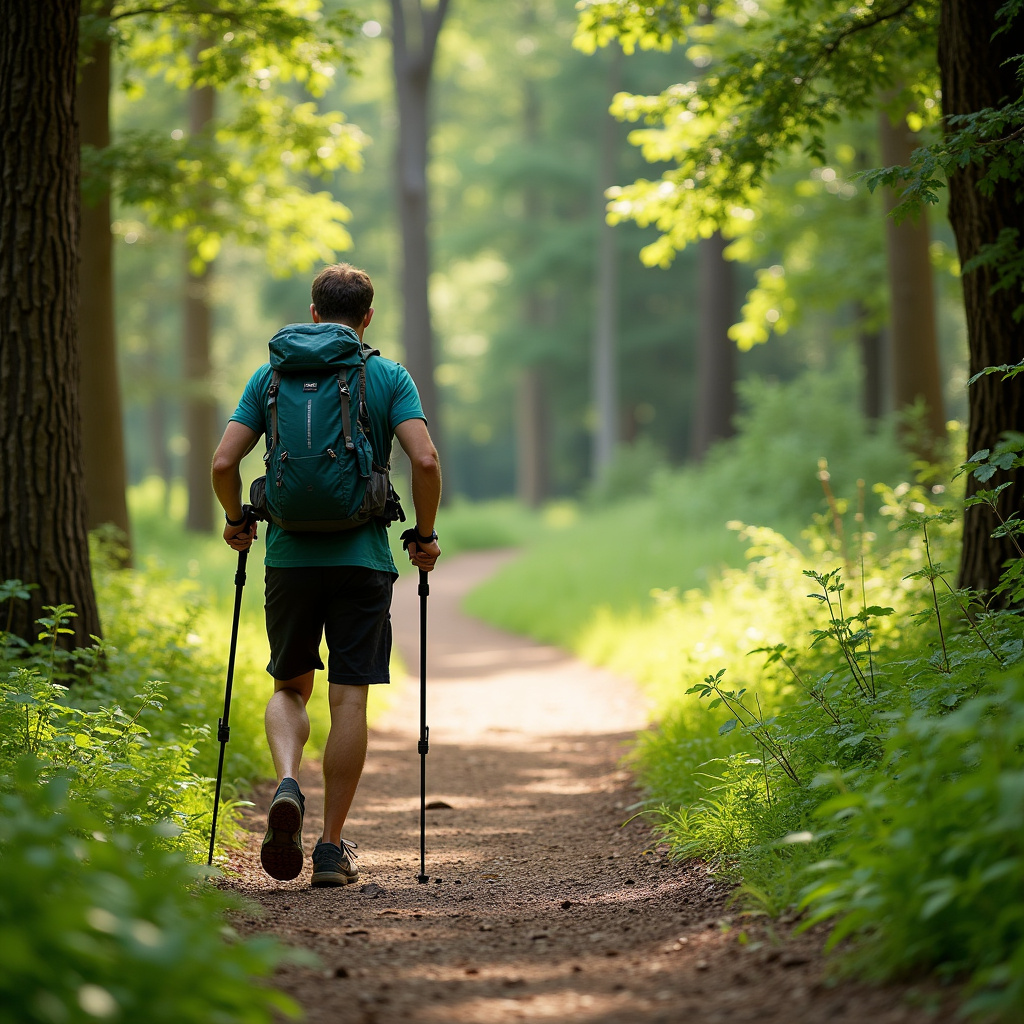
- Flat or Rolling Terrain: Use an opposite arm, opposite leg motion, swinging your poles naturally forward, planting them slightly behind your lead foot, and pushing off. Maintain a relaxed rhythm.
- Ascents: Plant your poles further ahead of you to propel yourself upwards. Shorten them slightly to get more leverage. Focus on using your upper body to push.
- Descents: Lengthen your poles to give you a wider reach. Plant them ahead and to the sides of your body, bracing yourself as you step down. This significantly reduces impact on your knees.
- River Crossings: Use your poles to test depth and stability before committing your feet. Plant them firmly to maintain three points of contact.
The Art of the Wrist Strap: A Secure Connection
Many first-time users grip their poles tightly, leading to forearm fatigue. The wrist strap is designed to bear much of the weight and absorb impact. Slide your hand up through the strap from below, then bring your hand down over the top of the strap and grasp the grip. This creates a secure loop that supports your hand and prevents the pole from dropping, allowing you to relax your grip.
Care and Feeding of Your Trail Companions
To ensure your trekking poles last for countless adventures, a little maintenance goes a long way. After each use, especially in wet or muddy conditions, extend your poles fully and wipe them clean with a damp cloth. Allow them to air dry completely before collapsing and storing to prevent corrosion, especially with twist-lock mechanisms. Periodically check the locking mechanisms for wear and tear, and clean any grit out of the shafts.
Conclusion: Pole Position for Peak Performance
Trekking poles are an investment in your hiking comfort, safety, and longevity on the trail. From protecting your precious joints to boosting your stability and endurance, their benefits are undeniable. By understanding how to choose the right pair and mastering proper technique, you’ll unlock a new level of confidence and enjoyment in your outdoor pursuits. So, next time you gear up for an adventure, don’t leave your trekking poles behind. Embrace these unsung heroes and feel the difference!
Sources:
- The Journal of Sports Sciences – Research on hiking with poles and impact forces. (General scientific consensus, specific article names vary but refer to similar findings)
- REI Co-op – Expert advice and buyer’s guides on trekking poles.
- Backpacker Magazine – Articles and guides on trekking pole usage and benefits.